
Choosing the Right E-Commerce Platform
Building an e-commerce website demands several steps: choosing the technology stack, selecting the secure payment service provider (PSP) suited to your audience. These decisions shape the robustness, performance and long-term viability of the platform.
These elements set the level of control you keep over the platform, its design and features. Crucial for Swiss and European SMEs, which must comply with data protection regulations (GDPR, nFADP) to secure consumer trust.
Before committing, assess your needs: catalogue size, target markets, payment methods expected by your customers, level of customisation your brand requires.
Two Fundamental Approaches
Two main options to launch an online shop. The first, pay for a proprietary, centralised SaaS platform, ready to use, quick to launch: Wix, Shopify, Squarespace. Your e-commerce presence then depends on an external company, often outside Swiss or European legislation, with several drawbacks:
- Your data and your shop belong to the provider.
- Hosting is predominantly based in the US or outside the EU.
- You are forced to use their templates and features.
- Migrating to another solution proves complex.
- Limited scalability to the provider’s infrastructure.
- Outsourced support with slow response times, often handled by a chatbot.
The second approach, build your own independent platform on open source technology. Full control over your source code, freedom in design and features, the choice of a host compliant with Swiss or European data protection standards. Several advantages:
- Full ownership of your data, content and transactions.
- Unlimited customisation as your business evolves.
- No commission, no subscription or hidden fees on sales.
- Freedom to choose your host and resources.
- Compliance with Swiss and European regulations (GDPR, nFADP).
Centralised SaaS Platforms
Limitations to Consider
SaaS solutions let you launch an online shop quickly, without technical skills: hosting, security and maintenance are managed by the provider. Before committing, read the terms carefully: these platforms often fall under non-European legislation, sometimes outside GDPR and nFADP compliance.
Open-Source E-Commerce Solutions
Advantages to Consider:
Open source e-commerce platforms provide full access to the source code, complete customisation freedom and no vendor dependency. Backed by active global communities, they offer innovative features, solid documentation, the free choice of host, plugins and themes. In return, setup and maintenance demand development skills.
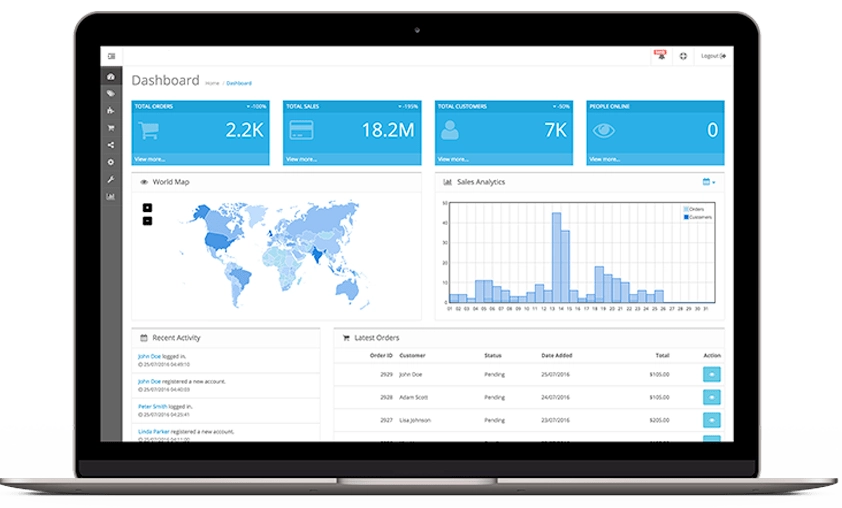
WooCommerce & WordPress Integration
WooCommerce is a free, open-source e-commerce solution that integrates seamlessly with WordPress. Highly customisable, accessible to beginners through the familiar WordPress interface, it supports B2C and B2B commerce, variable products, digital downloads, subscriptions. Backed by a vast community, it is a versatile and cost-effective choice, particularly suited to sites already built on WordPress.
Ready to build your solution?
Let’s discuss your needs and define a tailored development plan